
Unleash your ideas with Pi App Studio’s AI-powered, no-code platform. Learn how the blockchain-native .pi domain and ecosystem staking empower pioneers in the Open Mainnet.
Thank you for reading this post, don't forget to subscribe!

The Pi Network has officially transitioned into its Open Mainnet phase (active since February 20, 2025), moving from a focused community building stage to a fully open, functional, and tradable Web3 ecosystem. The two most powerful tools enabling this shift are the Pi App Studio and the .pi Domain system.
These platform-level utilities are designed to transform millions of everyday Pioneers into active app creators, merchants, and digital landlords.
1. What is the Pi App Studio? (The Engine of Utility)
The Pi App Studio, launched on Pi2Day (June 28, 2025), is an AI-powered, no-code/low-code platform that breaks down the barrier to app development. It is the central mechanism for scaling utility on the Pi blockchain.
How It Works: Creating a Mainnet App
The Studio democratizes app creation by allowing anyone to build and deploy a functional Web3 application using simple text prompts.
- AI-Assisted Scaffolding: You describe the application’s function (e.g., “a chatbot for local merchants,” or “a community voting tool”) using natural language. The Generative AI platform instantly writes and scaffolds the app’s basic code, logic, and design.
- Code Download & Refinement: For users with some technical skills, the Studio allows you to download and edit the source code locally, upload your changes, and refine the app’s features—a true low-code hybrid model.
- Mainnet Deployment: Once refined, the app is configured and deployed to the Pi Mainnet via the Developer Portal. For the app to be fully functional, the developer’s identity must be verified through KYC, and their business entity should undergo KYB (Know-Your-Business) to ensure trust and compliance for the ecosystem’s users.
- Ecosystem Directory Staking: This is a crucial feature. Users can stake their Pi coins on apps they find useful or promising. Apps with more staked Pi gain higher visibility and ranking in the Pi Browser’s Ecosystem Directory, creating a community-driven promotion and reward system for quality apps.
2. What is the .pi Domain? (The Digital Identity)
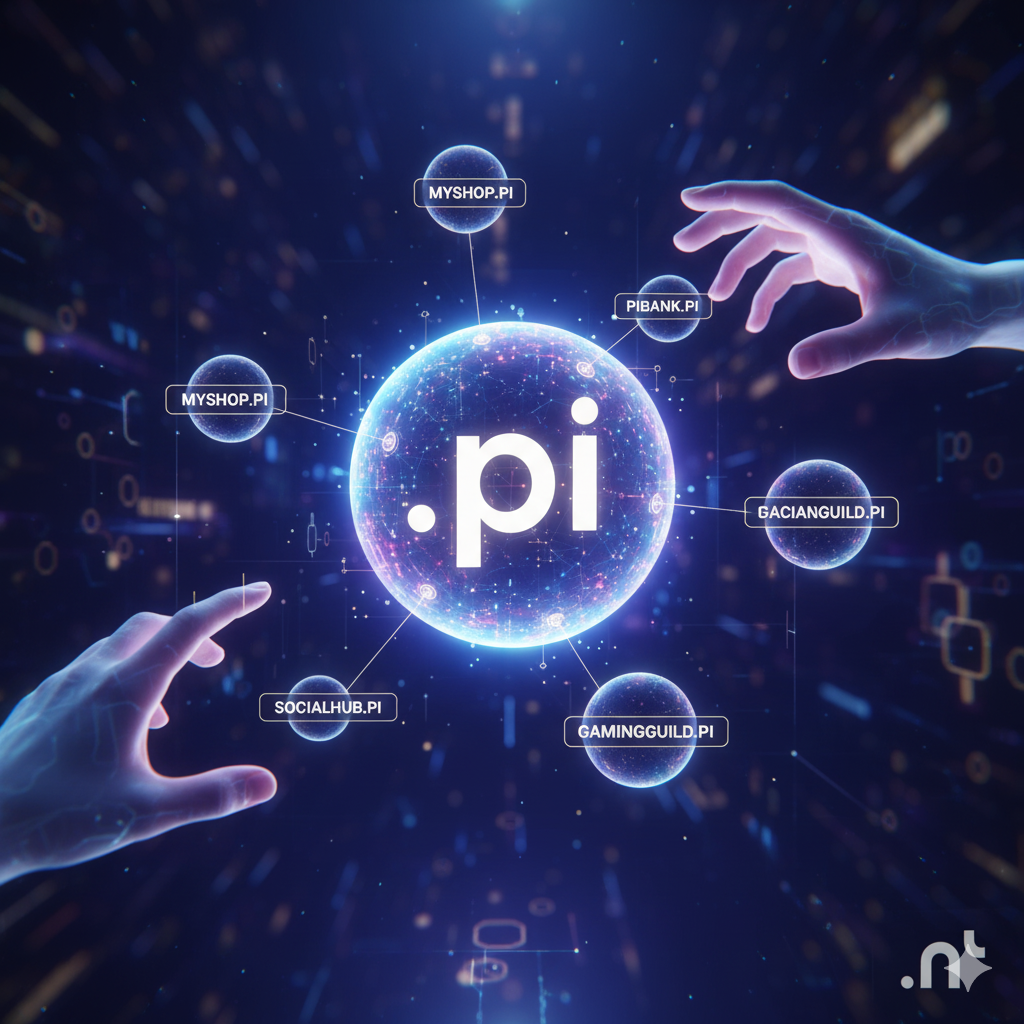
The .pi domain is the Pi Network’s blockchain-native naming system, acting as the unique, human-readable address for apps, businesses, and individuals on the Pi blockchain. It replaces long, complex wallet or contract addresses with a simple brand name (e.g., shop.pi instead of a 64-character address).
How It Works: Acquisition and Utility
The system was introduced in March 2025 via a successful auction to drive utility and prevent squatting.
- Acquisition via Auction: The initial domain auction, which concluded on September 30, 2025, required Pioneers to bid using real Pi Coin (PI). This directly translated the network’s asset into a foundational piece of infrastructure.
- The Claiming Requirement: To secure a winning domain, Pioneers must prove the domain will be used for a legitimate purpose. The claim process (active as of November 2025) requires the winner to:
- Connect a Pi App (often one built on the App Studio).
- Demonstrate a threshold of organic usage (e.g., meeting minimum transaction counts or active users).
- Renewal and Safeguards: Domains are subject to annual renewal fees in Pi and must maintain their utility/usage status to prevent “domain squatting” and ensure they remain available for real Web3 projects.
3. How Users Benefit from This Ecosystem
The integration of the Pi App Studio and the .pi Domain creates a powerful flywheel of utility and economic opportunity for every Pioneer: