
Decoding the Future: How Pi Network’s Ecosystem is Preparing for Mass Utility
Thank you for reading this post, don't forget to subscribe!
For years, Pi Network has captured the attention of millions with its unique mobile-first mining approach, aiming to make cryptocurrency accessible to the masses. The project has moved past the initial hype and is now building a robust foundation for its long-awaited Open Mainnet launch. With the introduction of a decentralized exchange (Pi DEX) and a strategic focus on liquidity, Pi Network is shifting the narrative from a simple mining app to a fully-fledged, utilities-driven blockchain ecosystem.
This in-depth guide will break down the latest developments, what the Open Mainnet and Pi DEX mean for the value of your Pi Coin, and why this is a pivotal moment for all Pioneers.
The Grand Transition: Open Mainnet is on the Horizon
The Open Mainnet phase is the most critical milestone for Pi Network. It represents the transition from the current Enclosed Mainnet—where transactions are restricted within the Pi ecosystem—to a fully open and globally connected blockchain.
Key Expectations of the Open Mainnet:
- External Connectivity: Pi will be able to interface with the broader crypto world, including other compliant networks and systems.
- Public Tradability: The Pi Coin will finally become tradable on centralized and decentralized exchanges, facilitating true price discovery.
- Enhanced Utility: The full suite of dApps (decentralized applications) built on the Pi platform will be fully operational and accessible to the public, driving real-world use cases.
- Mass KYC Completion: The Core Team continues to push for mass Know Your Customer (KYC) verification, a non-negotiable step to ensure a secure, compliant, and bot-free ecosystem before the open launch.
While a precise date is fluid, official updates have often targeted a launch window in the first half of 2025, contingent on meeting critical conditions like mass KYC and ecosystem readiness. Pioneers must complete their KYC and Mainnet migration checklist to be prepared for this historic event.
The Engine of Decentralization: Launching the Pi DEX
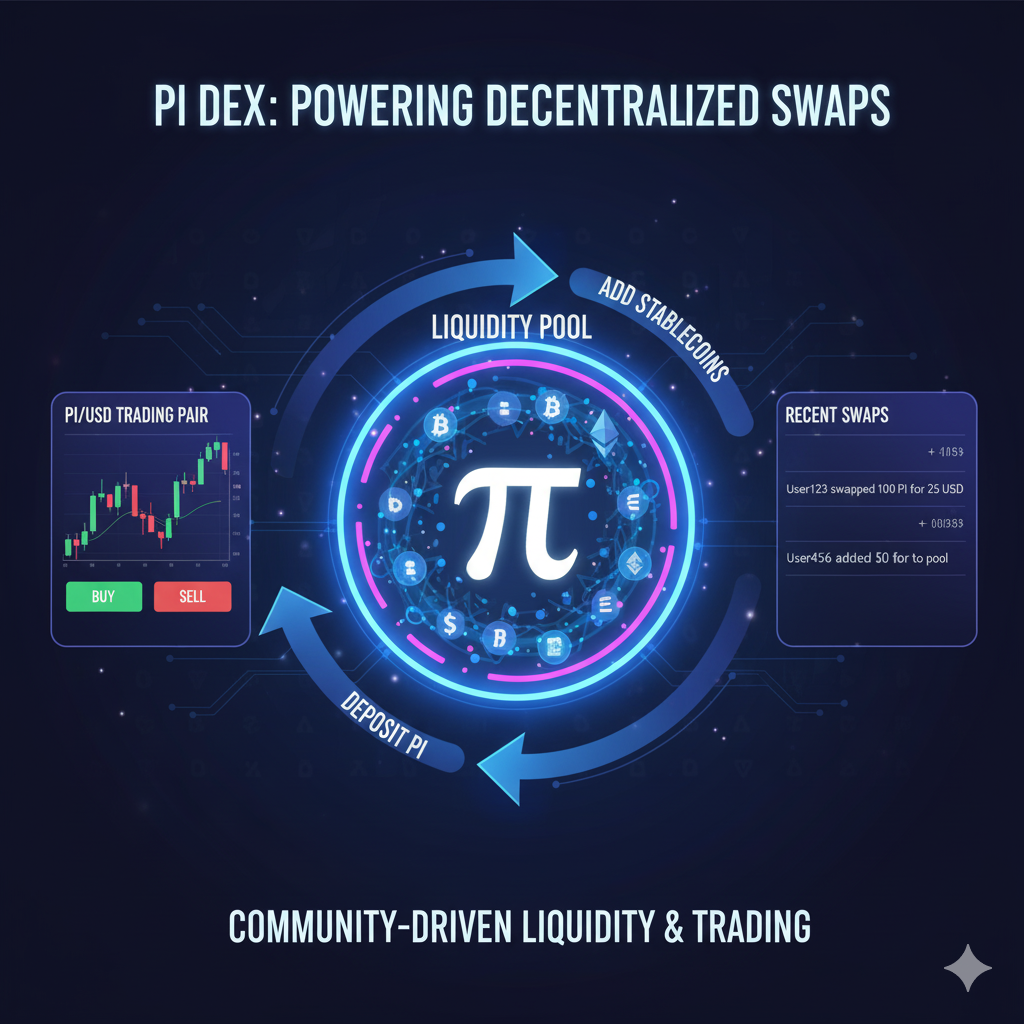
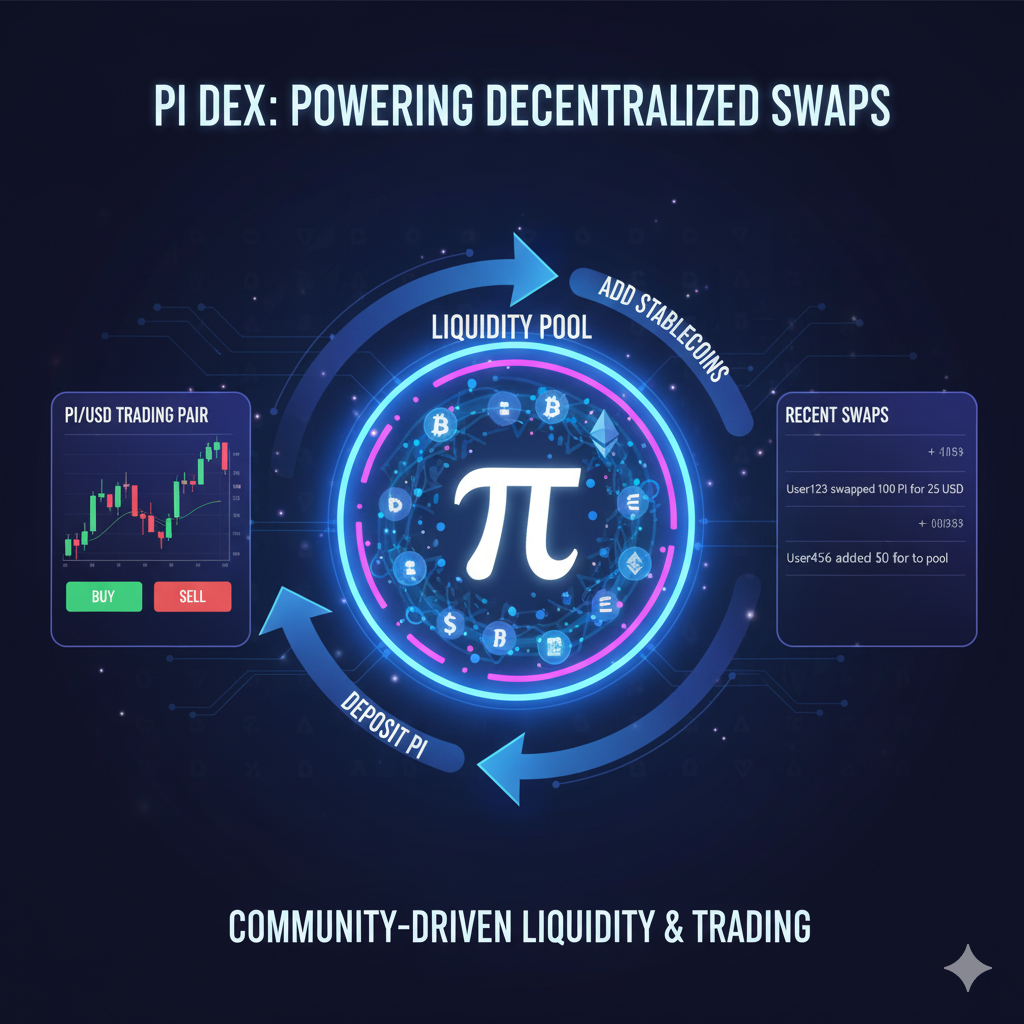
A decentralized exchange (DEX) is a peer-to-peer marketplace where users can trade cryptocurrencies directly without the need for a centralized intermediary like Binance or Coinbase. The introduction of Pi DEX is a cornerstone of the network’s DeFi (Decentralized Finance) expansion.
Why Pi DEX is a Game-Changer for Pi Coin:
- Direct Liquidity: The DEX, likely operating on an Automated Market Maker (AMM) model, allows users to contribute their Pi and other tokens to liquidity pools. This is the first step toward establishing a robust, community-driven liquidity base.
- Price Stability: DEXs allow for continuous, transparent price discovery. When users trade Pi for other tokens (or vice-versa), the market finds its natural value based on supply and demand within the ecosystem.
- Eliminating Intermediaries: By providing peer-to-peer trading, Pi DEX removes the risks, delays, and high fees often associated with centralized exchanges.
- Ecosystem Support: The ability to swap Pi with other tokens created within the Pi ecosystem (like tokens for dApps) will catalyze the growth and utility of third-party applications.
In simple terms, Pi DEX is the fundamental trading infrastructure that transforms Pi from a “community currency” into a “tradable digital asset.”
The Impact of Liquidity on Pi Coin’s Value
In the crypto world, liquidity refers to how easily an asset can be bought or sold without significantly affecting its price. High liquidity is crucial for stability and a healthy market.
| Liquidity Factor | Why It Matters for Pi Coin (PI) | Impact on Price |
| DEX Liquidity Pools | Users providing Pi and a counter-asset (like a stablecoin) ensure trades can be executed smoothly with low slippage. | Increases Stability, Reduces Volatility |
| Exchange Listings | Listing on major CEXs (after Open Mainnet) introduces Pi to a massive global audience and institutional capital. | Increases Trading Volume and Price |
| Real-World Utility | DApps and marketplaces like YourOffer that accept Pi create genuine, external demand for the coin. | Drives Sustainable Long-Term Value |
| KYC Migration | The number of fully verified Pioneers who can access their Mainnet Pi directly affects the circulating supply and the potential size of liquidity pools. | A Prerequisite for Price Discovery |
The Global Consensus Value (GCV) Strategy
The Pi community often discusses a Global Consensus Value (GCV), a community-driven ideal price for transactions within the Enclosed Mainnet. While this value is internal and not yet tied to open market exchanges, the Core Team’s focus on a utilities-driven ecosystem (DEX, dApps, merchant adoption) is designed to give Pi real-world function, which is the only true basis for long-term value in the open market.
What’s Next for Pioneers? Actionable Steps
Pi Network is at a critical inflection point. For active Pioneers, now is the time to finalize your preparations.
- Complete Your KYC: Ensure your identity verification is approved to migrate your earned Pi to the Mainnet.
- Finalize Your Mainnet Checklist: This includes setting up your Pi Wallet and deciding on your lockup configuration.
- Explore the Ecosystem: Engage with dApps and test the Pi DEX Testnet features to understand the transactional utility of Pi.
- Stay Informed: Follow official channels for the Open Mainnet and major exchange listing announcements.
The journey of Pi Network is a testament to the power of a large, dedicated community. As the DEX launches and the Open Mainnet looms, the project is finally prepared to take its place in the broader decentralized financial landscape. The future of Pi Coin will be determined not just by mining, but by the utility, liquidity, and stability built into its new, open ecosystem.
Disclaimer: This content is for informational purposes only. The value of cryptocurrency is volatile and can fluctuate dramatically. Always conduct your own research (DYOR) before making any investment decisions.