
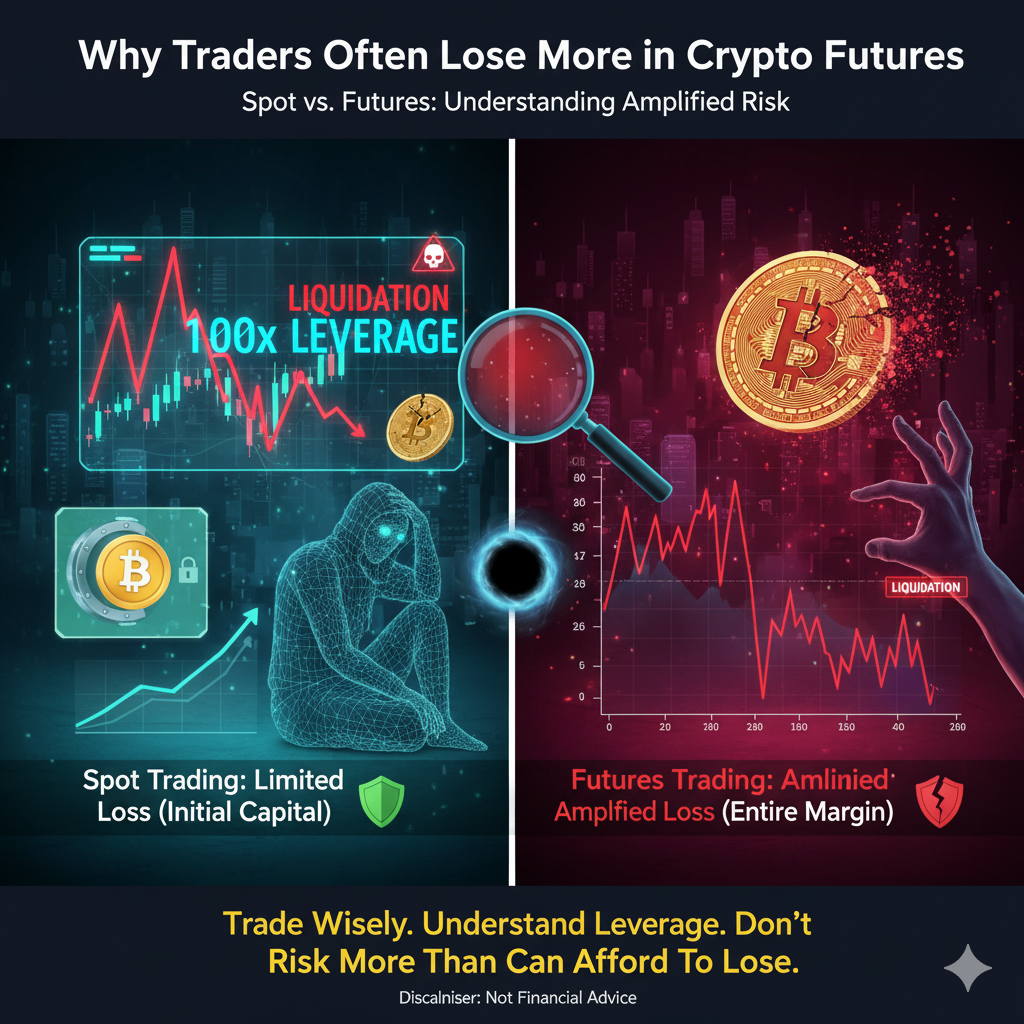
The allure of high returns in cryptocurrency trading is powerful, especially with the promise of amplified gains through futures contracts. However, the reality for many traders, particularly those new to the game, is often significant losses. Understanding why this happens requires a clear look at the mechanisms of futures trading compared to spot trading, and the inherent risks involved.
Spot Trading: The Basics of Ownership
Spot trading is the most straightforward way to participate in the crypto market. When you conduct a spot trade, you are buying or selling a cryptocurrency at its current market price for immediate delivery.
- How it Works: You exchange one asset for another. For example, you buy Bitcoin ($BTC) with Tether ($USDT). You then own that Bitcoin.
- Risk Profile: In spot trading, your primary risk is the volatility of the asset’s price. If you buy Bitcoin at $70,000 and its price drops to $60,000, you’ve incurred a theoretical loss if you sell. Your maximum loss is generally limited to the initial capital you invested. If you buy $1,000 worth of Bitcoin, the most you can lose is that $1,000 if Bitcoin goes to zero.
Futures Trading: Speculation with Amplified Risk
Futures trading, common in traditional finance and now prevalent in crypto, involves an agreement to buy or sell an asset at a predetermined price on a specified future date. In crypto, perpetual futures (which have no expiry) are particularly popular for speculative trading.
The key difference, and the primary reason for increased losses, is leverage.
- How Leverage Works: Leverage allows you to open a position with a value much larger than your actual capital (your “margin”). For example, with 10x leverage, a $100 margin can control a $1,000 position. This amplifies potential profits, but critically, also potential losses.
- Margin Calls and Liquidation: If the market moves against your leveraged position, your losses quickly erode your margin. If your margin falls below a certain threshold (the maintenance margin), the exchange will issue a “margin call,” requiring you to add more funds. If you fail to do so, or if the market moves too quickly, the exchange will automatically close your position to prevent further losses for itself. This automatic closing is called liquidation, and it means you lose your entire margin.
Why Traders Lose More in Futures
Several factors combine to make futures trading a high-stakes, high-loss environment for many:
- Leverage Magnifies Everything: This is the most significant factor. A small 1% price move against a 50x leveraged position means you’ve lost 50% of your margin. A 2% move means liquidation. In highly volatile crypto markets, these swings are common.
- Crypto Volatility: Bitcoin and altcoins are notoriously volatile. Daily swings of 5-10% are not uncommon. When you add leverage to this inherent volatility, positions can be wiped out in minutes, even seconds.
- Funding Rates: Perpetual futures often have “funding rates” – small fees paid between long and short position holders. These rates adjust to keep the futures price aligned with the spot price. Over time, paying a negative funding rate can significantly eat into profits or deepen losses, especially for long-held leveraged positions.
- Emotional Trading: The pressure of a highly leveraged position can lead to impulsive, emotional decisions. Traders might over-leverage, ignore stop-loss orders, engage in “revenge trading” after a loss, or chase pumps and dumps, all of which are recipes for disaster.
- Complexity and Information Asymmetry: Futures trading involves more complex concepts (margins, funding, various order types) than spot trading. Retail traders often lack the sophisticated tools, capital, and market insights available to institutional players, putting them at a disadvantage.
- Market Manipulation: The crypto market, particularly for less liquid assets, can be susceptible to manipulation by “whales” (large holders). These large orders can cause rapid price shifts, leading to “whipsaws” that trigger widespread liquidations of retail traders.
How Much Can You Truly Lose?
- In Spot Trading: Generally, you can only lose the capital you initially invested in the asset.
- In Futures Trading: You can lose your entire margin very quickly. While most reputable exchanges have auto-deleveraging or insurance funds to prevent traders from losing more than their margin, the reality is that your initial capital can vanish in a blink due due to liquidation.
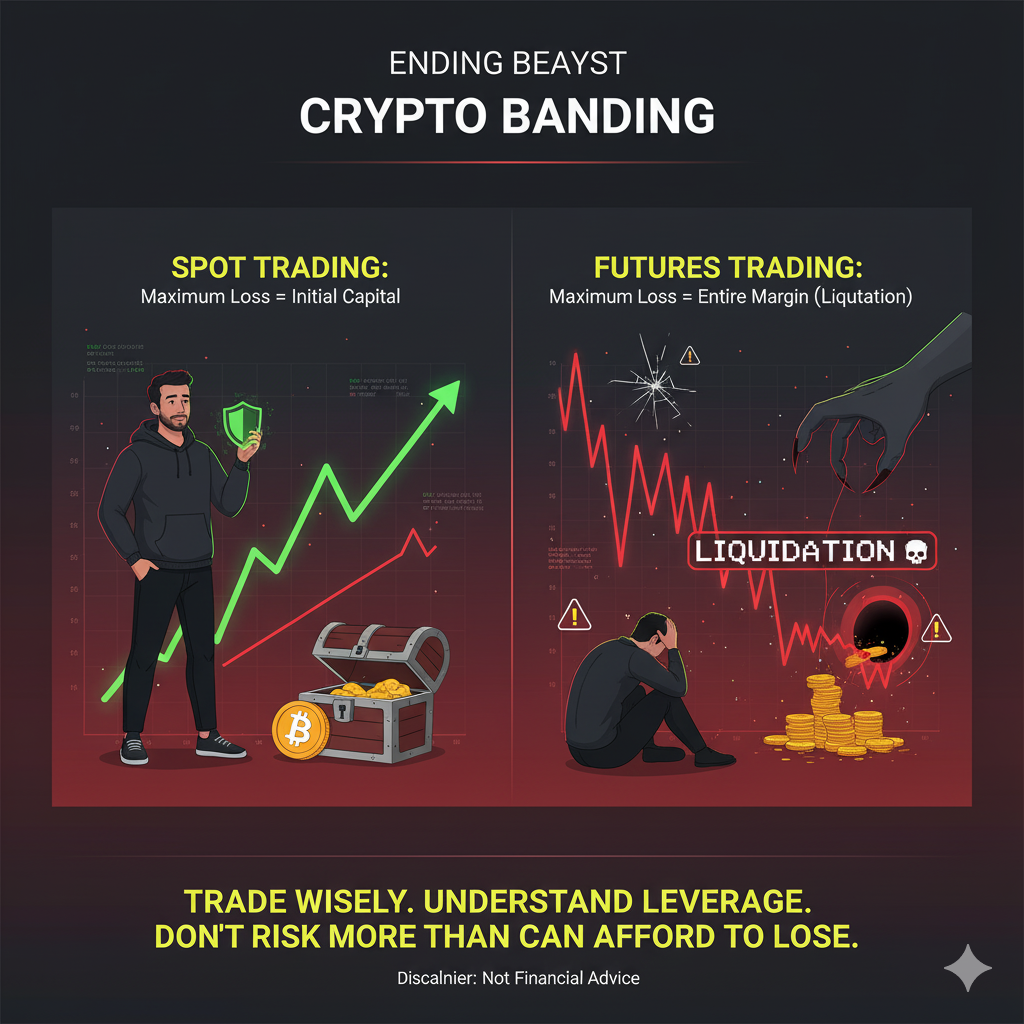
The “Future” of losses often lies in misunderstanding leverage. It’s a powerful tool for experienced traders to amplify returns or hedge risks, but for beginners, it typically amplifies financial peril.
Disclaimer: This article is for informational purposes only and is not financial advice. Cryptocurrency investments, especially leveraged trading, are highly volatile and speculative. You can lose all of your capital. We recommend you conduct your own thorough research and consult a financial professional before making any investment decisions.