Learn key crypto terms and definitions in simple words. A beginner-friendly U.S. guide to blockchain, wallets, DeFi, NFTs, and crypto security.

Crypto Terms Explained: Beginner’s Guide for Americans
If you’ve been hearing about Bitcoin, Ethereum, or NFTs in the news, you’ve probably noticed the world of cryptocurrency has its own unique language. For beginners in the U.S., words like staking, gas fees, or HODL can feel overwhelming.
This guide breaks down the most common crypto terms in simple, plain-English explanations. By the end, you’ll feel confident navigating the fast-moving world of digital assets.
What Is Cryptocurrency?
Cryptocurrency is digital money that runs on blockchain technology instead of banks. The most well-known examples are Bitcoin and Ethereum. Unlike dollars, crypto is decentralized, meaning no government or single company controls it.
Blockchain Basics
A blockchain is a public digital ledger. Every transaction is stored in a block and added to a chain of previous transactions. Because of its design, records can’t easily be changed or erased—making blockchain secure and trustworthy.
Coins, Tokens, and Altcoins
- Coins: Native assets of their own blockchain, like Bitcoin (BTC) or Ether (ETH).
- Tokens: Built on existing blockchains, often used in DeFi apps or as stablecoins like USDC.
- Altcoins: Any cryptocurrency that isn’t Bitcoin.
Stablecoins: Reducing Volatility
Stablecoins are digital currencies tied to assets like the U.S. dollar. Popular examples are USDT and USDC, which aim to keep their value steady—unlike Bitcoin, which can swing wildly.
Wallets, Keys, and Security
A crypto wallet stores your private keys—the codes that give you control over your money.
- Public key/address: Like your bank account number, used to receive funds.
- Private key: Like your PIN, it must be kept secret.
- Seed phrase: A backup list of words that can recover your wallet.
Wallets come in two main types:
- Hot wallets: Internet-connected and convenient but more vulnerable.
- Cold wallets: Offline devices like hardware wallets that offer stronger protection.
Gas Fees and Transactions
On blockchains like Ethereum, users pay gas fees to get their transactions processed. These fees compensate validators or miners for securing the network.
Mining, Staking, and Validators
- Mining: Computers solve puzzles to verify transactions (used in Bitcoin).
- Proof of Work (PoW): Mining-based validation.
- Proof of Stake (PoS): Validators lock up coins (“stake”) instead of mining to secure the network (used by Ethereum since 2022).
- Validator: A participant who confirms transactions in PoS systems.
Trading Terms You Should Know
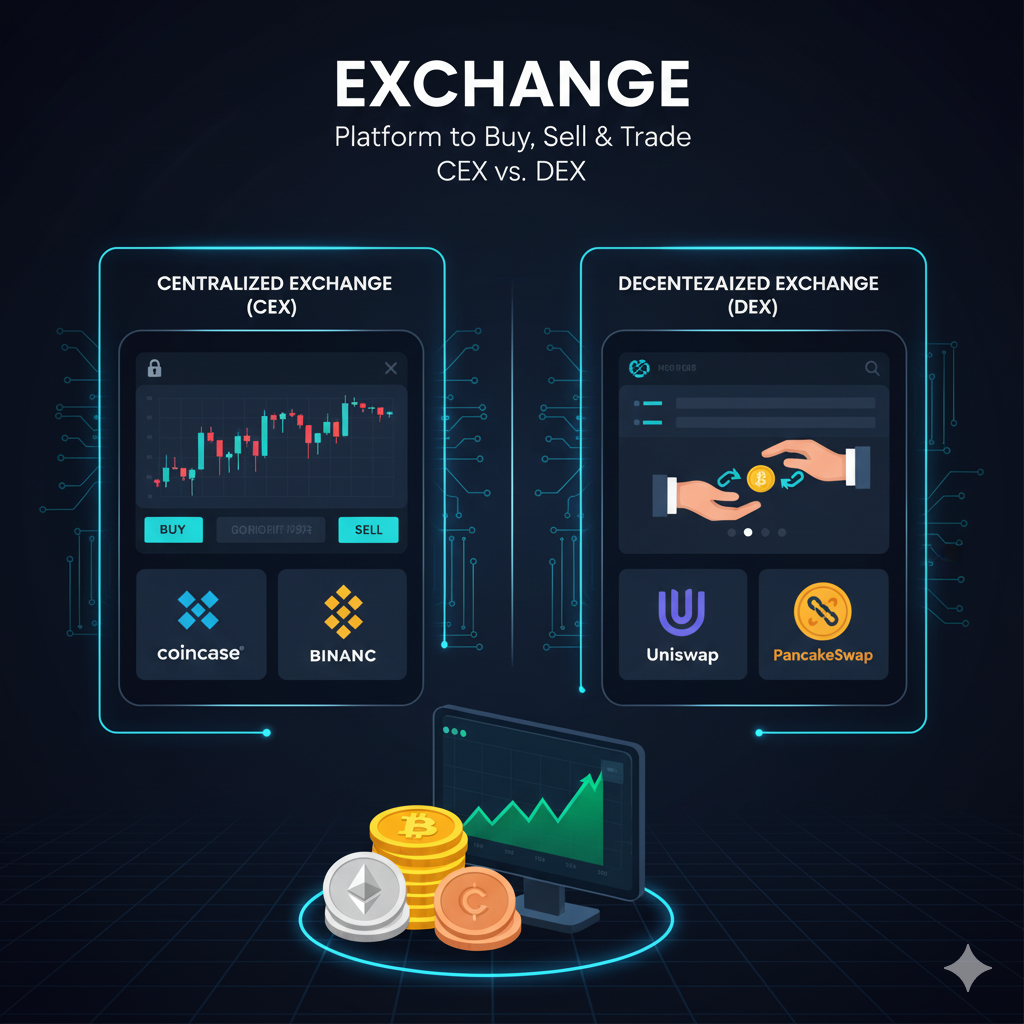
- Exchange: Where you buy and sell crypto. Centralized exchanges like Coinbase are popular in the U.S., while decentralized exchanges (DEXs) like Uniswap allow peer-to-peer trading.
- Liquidity: How easily you can trade without moving the price.
- Market Cap: Total value of a cryptocurrency (price × supply).
- HODL: Holding crypto long-term instead of trading frequently.
- Whale: A large holder whose trades can impact prices.
- FOMO & FUD: Emotional drivers—Fear of Missing Out and Fear, Uncertainty, Doubt.
DeFi: Decentralized Finance
DeFi is blockchain-based finance without banks. Popular activities include:
- Staking: Locking up tokens for rewards.
- Yield Farming: Providing liquidity to earn extra tokens.
- Liquidity Pools: Shared pools of funds enabling trading and lending.
- Smart Contracts: Self-executing programs that automate transactions.
NFTs and Web3 Terms
- NFT (Non-Fungible Token): A unique digital collectible stored on blockchain, often representing art or music.
- Minting: Creating an NFT.
- Metaverse: Virtual worlds where digital ownership matters.
- DAO (Decentralized Autonomous Organization): A blockchain-based community where decisions are made by token holders.
Common Crypto Risks
- Rug Pulls: Developers abandon a project after raising money.
- Pump and Dump: Price manipulation by hyping a coin then selling quickly.
- Phishing & Scams: Attempts to steal your keys or seed phrase.
Final Thoughts for U.S. Beginners
Cryptocurrency is an exciting but complex space. By learning these crypto terms, you’ll be better prepared to invest wisely, avoid scams, and explore opportunities in blockchain, DeFi, and NFTs.
Pro Tip: If you’re in the U.S., stick to regulated exchanges like Coinbase, Kraken for safer trading. And always remember: never share your private key or seed phrase.