

BRICS nations, led by China, are accelerating US dollar offloading to support the yuan amid trade tensions. Learn the future impact on the dollar’s global status.
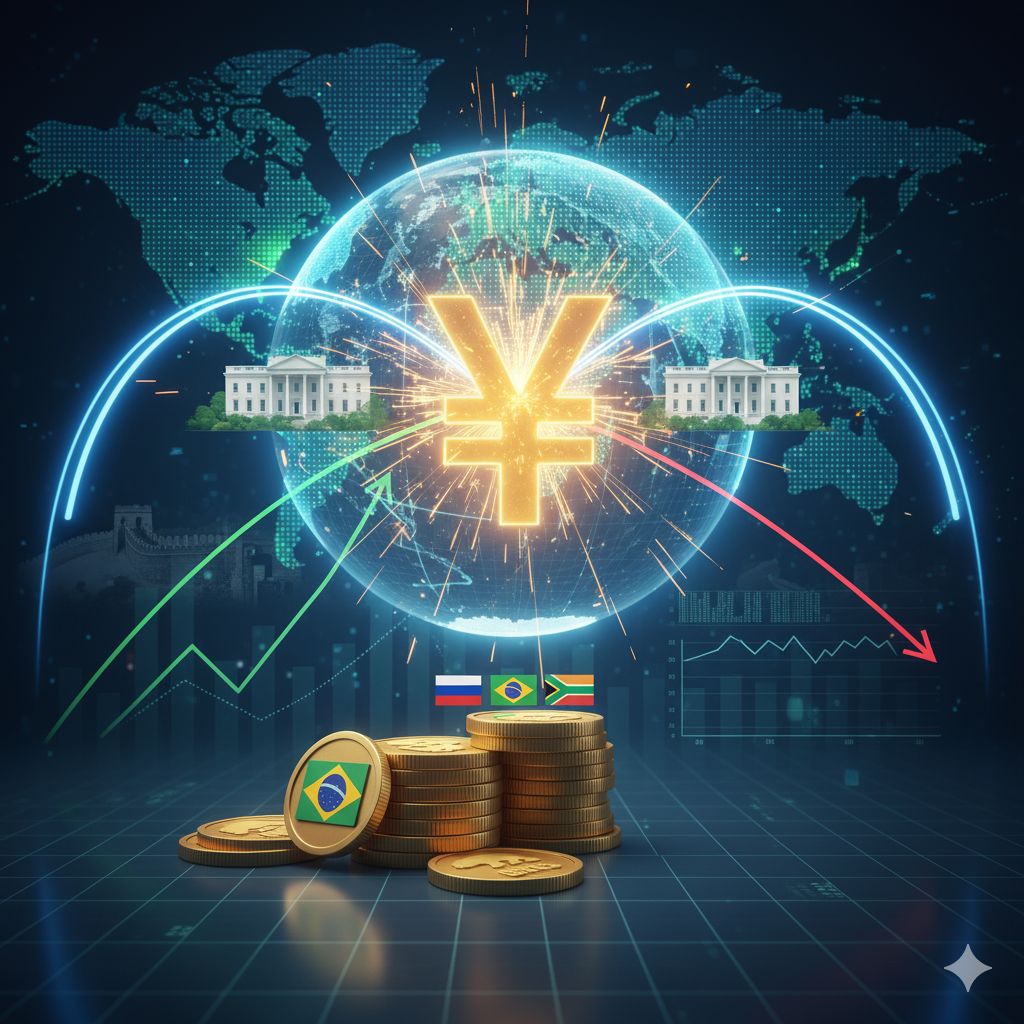
BRICS nations, led by China, are significantly offloading US dollars in favor of local currencies like the yuan. Explore the reasons behind this shift, its future impact on the dollar’s global dominance, and the evolving landscape of international finance.
The global financial landscape is witnessing a significant shift, with BRICS nations increasingly challenging the long-standing dominance of the US dollar. Recent reports indicate a substantial acceleration in dollar selling, particularly by China, signaling a strategic move that could have profound future implications for the greenback.
China Leads the Charge: $51.8 Billion Offloaded
In a striking development, Chinese banks, supported by the People’s Bank of China (PBOC), facilitated the offloading of overseas currencies worth $51.8 billion in September alone. This represents the largest such conversion since December 2020 and involves a wide array of Chinese clients, from exporters to investors. The primary beneficiary of this massive conversion is the Chinese yuan (CNY), which the PBOC has actively worked to keep at its strongest monthly reference rate.
This isn’t just a tactical financial maneuver; it’s a strategic vote of confidence in the yuan and a clear step towards its internationalization.
The Trade Tensions Catalyst
What’s driving this accelerated shift? Renewed trade tensions between the US and China appear to be a major catalyst. Following US President Donald Trump’s decision to impose tariffs on China and other nations in early October, the response from Beijing and its BRICS partners has been decisive. The dollar selling is a direct reaction, aimed at strengthening domestic financial stability and asserting economic sovereignty.
BRICS United Against Dollar Dominance
The broader BRICS bloc (Brazil, Russia, India, China, South Africa) is demonstrating a united front, expressing growing dissatisfaction with the US dollar and actively advocating for the use of local currencies in international trade and finance. The commitment goes beyond just rhetoric; there are active discussions and initiatives, such as the reported intention of BRICS nations to convert US dollar loans into Chinese yuan.
This collective action underscores a strategic long-term vision to reduce dependence on the US dollar, creating a more multipolar currency system.
Future Impact on the US Dollar
The implications of this trend for the US dollar’s future global standing are considerable:
- Erosion of Reserve Status: While the dollar remains the world’s primary reserve currency, sustained efforts by major economies to diversify away from it could gradually erode its share in global reserves.
- Trade and Transaction Shift: As more trade between BRICS and allied nations is conducted in local currencies, the demand for dollars in international transactions could decrease. This means fewer foreign exchange conversions involving the dollar.
- Reduced Financial Leverage: The US has historically leveraged the dollar’s status to exert significant financial and geopolitical influence. A decline in dollar dependency could temper this leverage.
- Increased Volatility for Dollar: With reduced global demand and increased offloading, the dollar could experience greater volatility against other major currencies.
A Multipolar Currency Future
The current actions by BRICS nations suggest that the era of uncontested US dollar dominance might be slowly receding. We are potentially moving towards a more multipolar currency system where the yuan, and potentially other BRICS currencies, play a more prominent role. While the dollar will undoubtedly remain a crucial currency for the foreseeable future, its exclusive global reign is being challenged from multiple fronts.
This evolving landscape demands attention from businesses, investors, and policymakers worldwide, as the shift in currency dynamics will inevitably reshape global trade, investment, and geopolitical relations.