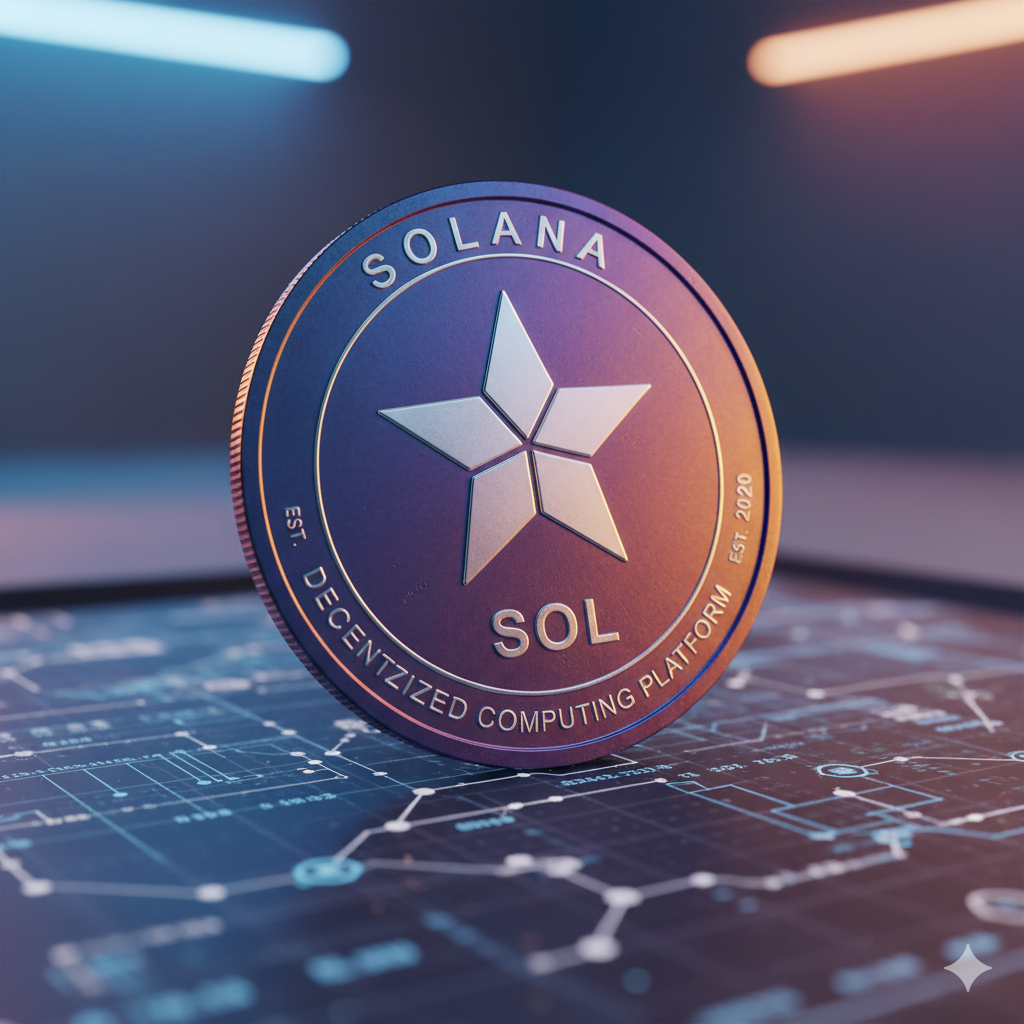
Explore Solana’s long-term potential: SOL price forecasts for 2026 and 2030, deep dive into major network upgrades like Alpenglow and Firedancer, and the growing wave of institutional interest and ETF talks.

Solana: The “Crypto Financial Bazaar” Setting Course for 2030
Solana ($SOL) has long been lauded as a high-speed, low-cost “Ethereum Killer,” but its narrative has recently evolved from a high-risk, high-reward altcoin to an institutional-grade contender. With massive technical upgrades on the horizon and major financial players taking notice, the question is no longer if Solana can survive, but how high it can fly.
This blog post dives into the factors shaping Solana’s future, examining its revolutionary development roadmap and the long-term price potential for $SOL through 2030.
The Technical Pillars: Alpenglow, Firedancer, and ACE
Solana’s core value proposition has always been speed, but its history of occasional network outages has been a point of institutional hesitation. The current development roadmap, spearheaded by upgrades like Alpenglow, Firedancer, and Application-Controlled Execution (ACE), directly addresses these concerns, setting the stage for unmatched reliability and performance.
1. Alpenglow: Near-Instant Finality
The Alpenglow upgrade is arguably the most transformative. It is set to replace Solana’s older consensus mechanisms (TowerBFT and Proof-of-History) with new primitives like Votor and Rotor.
- Impact: This dramatically reduces transaction finality—the time it takes for a transaction to be confirmed irreversibly—from several seconds to as low as 100-150 milliseconds.
- Significance: This sub-second finality is critical. It matches the speed of traditional Web2 payment rails like Visa, making Solana an ideal settlement layer for real-time applications, high-frequency trading, and tokenized assets.
2. Firedancer: The Scalability Engine
Firedancer is a new, high-performance validator client developed by Jump Crypto, designed to run alongside Solana’s existing client. It is a fundamental step toward enhancing both network resilience and throughput.
- Impact: By introducing client diversity, it mitigates the risk of a single software bug bringing down the entire network. In terms of performance, Firedancer aims to scale the network’s throughput to over 1 million transactions per second (TPS), far exceeding the current 65,000+ TPS.
- Significance: This extreme scalability ensures the network can handle mass adoption, including major surges in memecoin trading or large-scale gaming dApps, without becoming congested.
3. Application-Controlled Execution (ACE)
ACE is a set of proposed features that grants developers more granular control over transaction ordering. This is aimed at improving market microstructure.
- Impact: ACE can significantly reduce “front-running” (where bots profit by re-ordering transactions) and enable more sophisticated, deterministic execution logic for Decentralized Exchanges (DEXs) and trading platforms.
- Significance: This refinement is crucial for attracting large, institutional trading desks that demand predictable and fair execution environments.
The Institutional Shift: DeFi, Tokenization, and ETFs
Technical maturity is being met with surging institutional interest. Grayscale has already dubbed Solana as “crypto’s financial bazaar,” a testament to its vibrant ecosystem.
- DeFi and TVL Growth: Solana’s Total Value Locked (TVL) has soared, pushing its DeFi ecosystem past significant milestones. Its fast, cheap environment makes it a natural home for capital-efficient DEXs and lending protocols.
- Real-World Asset (RWA) Tokenization: Solana’s high-throughput capacity is perfectly suited for the tokenization of RWAs—from real estate to private equity—a sector poised for massive growth as traditional finance moves on-chain.
- ETF Momentum: The prospect of a Spot Solana ETF in major jurisdictions is a massive bullish catalyst. Similar to the impact of Bitcoin and Ethereum ETFs, regulatory approval for a Solana ETF would unlock massive institutional capital inflows, further solidifying its position as a top-tier investment asset.
Solana ($SOL) Price Prediction: 2026 to 2030
Predicting exact crypto prices is always speculative, but by considering the technical roadmap and market adoption factors, we can outline informed long-term potential.
| Year | Key Drivers | Potential Price Range | Rationale |
| 2026 | Alpenglow mainnet deployment; Firedancer full rollout; sustained institutional interest from ETF inflows. | $300 – $550+ | The post-Alpenglow era of near-instant finality makes Solana highly attractive for enterprise adoption. Successful ETF launches accelerate capital accumulation. |
| 2028 | Significant RWA tokenization volume; major Web2 companies leveraging Solana for global settlement; further Defimarket share capture. | $600 – $950+ | Institutional money and high utility lead to a more stable price floor. SOL approaches the $1,000 mark as its scalability becomes a foundational layer for Web3. |
| 2030 | Solana as a dominant global settlement layer, processing transactions for financial markets and large-scale consumer applications. | $1,000 – $1,500+ | If Solana achieves its vision of becoming the “on-chain Nasdaq” and is used to power major industry infrastructure, its valuation could rival that of legacy financial systems. |
Disclaimer: These are price forecasts based on current fundamental and technical developments. Cryptocurrency is a high-risk asset class, and market conditions can change rapidly.
The Long-Term Investment View
Solana’s journey is not without risk. Concerns about centralization (due to high validator hardware requirements) and competition from other Layer-1s remain. However, the ecosystem has shown remarkable resilience and a commitment to technical excellence.