
Explore Agentic AI, the next leap in artificial intelligence. Discover how autonomous digital agents are set to transform industries, from automating tasks to revolutionizing decision-making. Learn what it means for the future of your job.
Thank you for reading this post, don't forget to subscribe!
Introduction: Beyond Chatbots – The Dawn of Autonomous AI
For the past few years, we’ve marveled at the capabilities of Large Language Models (LLMs) like ChatGPT, engaging in human-like conversations and generating creative content. But what if your AI assistant could do more than just answer questions? What if it could act on its own?
Enter Agentic AI. This isn’t just about smart software; it’s about giving AI the power to understand goals, plan steps, execute actions, and even correct itself along the way, all without constant human oversight. We’re moving from a world of passive AI tools to active, autonomous digital assistants. This fundamental shift is poised to redefine how we work, innovate, and even live.
What Exactly is Agentic AI? The Brains Behind the Autonomy
Imagine an AI that doesn’t just write code, but deploys it, tests it, and fixes bugs autonomously. Or an AI that doesn’t just summarize market data, but actively monitors the market, identifies opportunities, and executes trades based on predefined strategies. That’s Agentic AI in a nutshell.
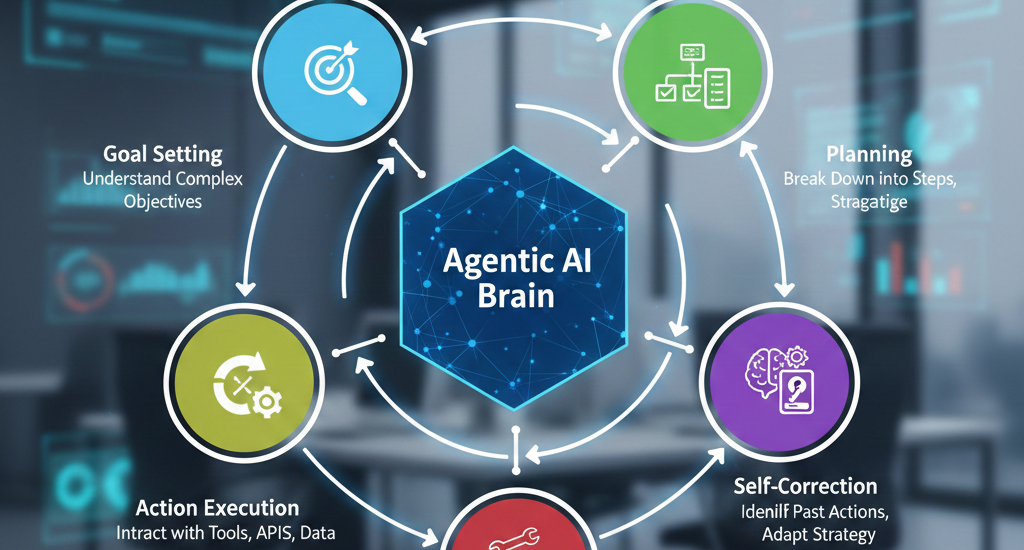
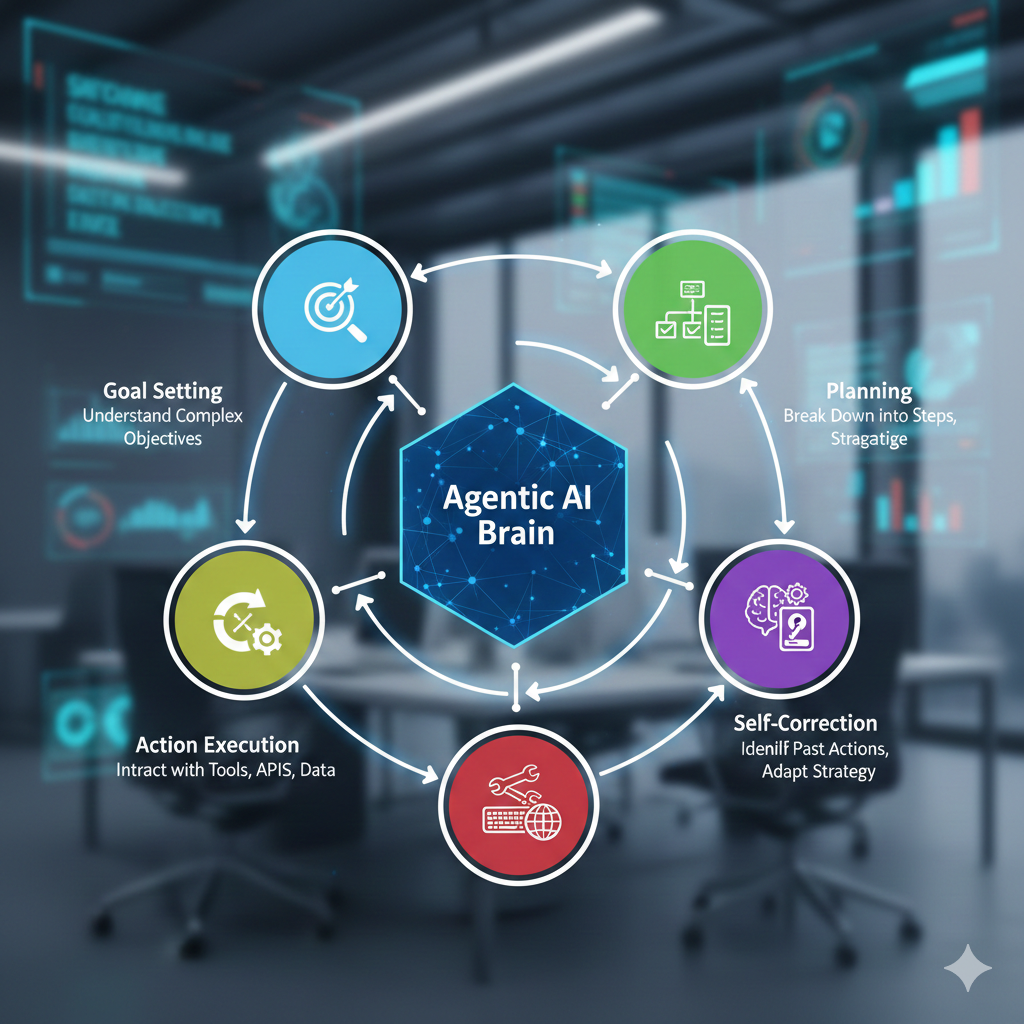
At its core, an Agentic AI system consists of several key components:
- Goal Setting: Understanding a complex, high-level objective.
- Planning: Breaking down the goal into smaller, executable steps.
- Action Execution: Interacting with external tools, APIs, and data sources to perform tasks.
- Memory & Learning: Remembering past actions and outcomes to improve future performance.
- Self-Correction: Identifying errors or suboptimal paths and adjusting its strategy.
This allows AI to move beyond reactive responses to proactive problem-solving.
How Agentic AI is Already Changing Industries
The impact of autonomous agents is beginning to ripple across various sectors:
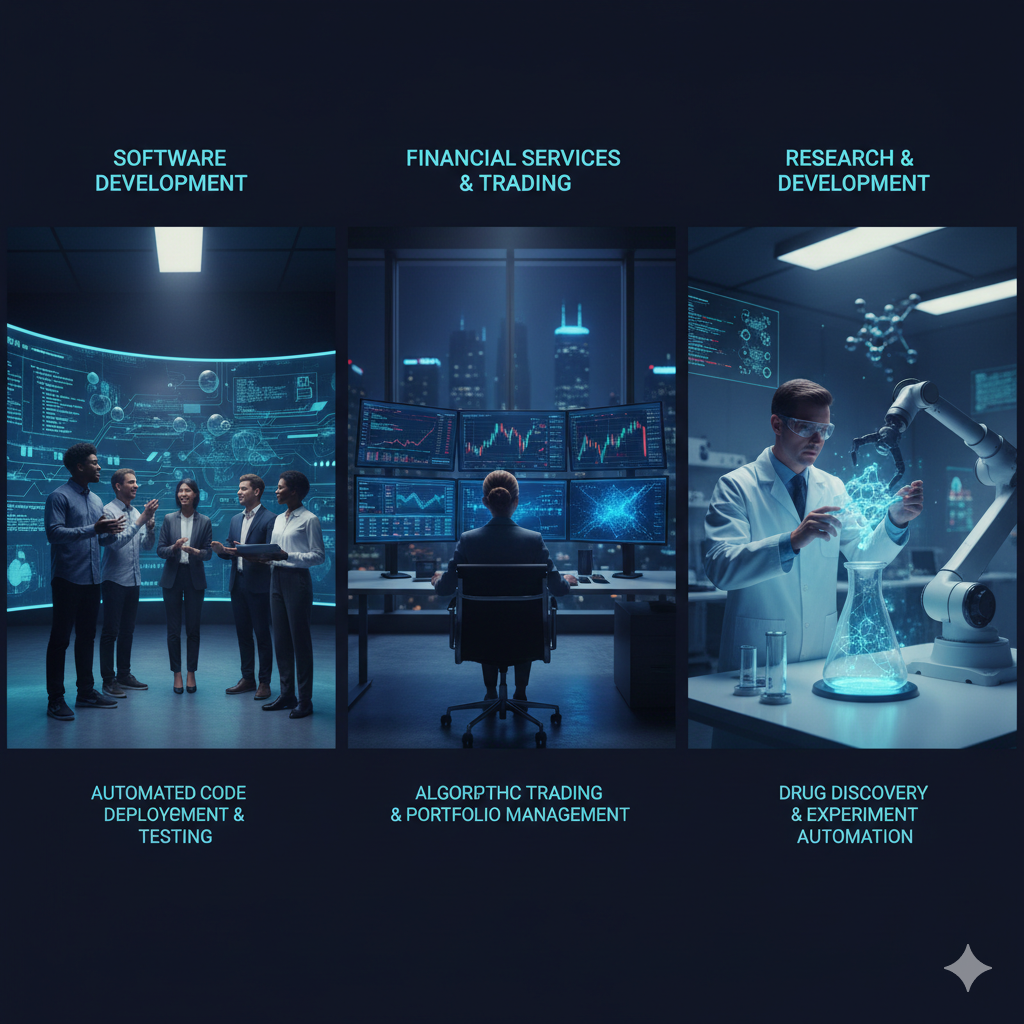
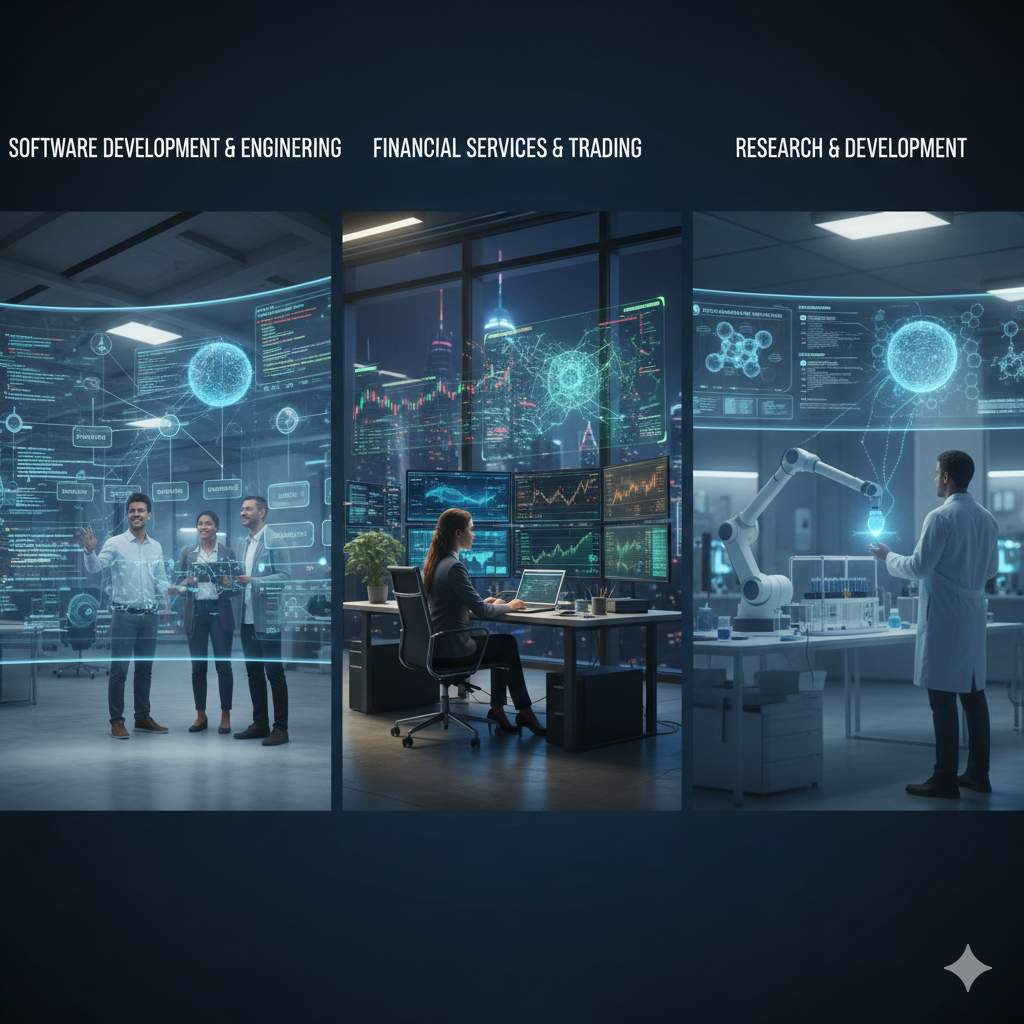
1. Software Development & Engineering
Instead of just writing snippets, AI agents can take a high-level request like “build a weather app,” break it into tasks, write the front-end, back-end, set up the database, test it, and even deploy it to a server. This significantly accelerates development cycles and frees human developers for higher-level architectural design and innovation.
2. Financial Services & Trading
Autonomous agents can monitor thousands of data points, identify arbitrage opportunities, execute trades within milliseconds, and manage portfolios based on complex algorithms and risk parameters—all without direct human intervention in real-time.
3. Research & Development
Imagine an AI agent tasked with finding a new drug compound. It could scour scientific literature, design experiments, simulate molecular interactions, and even control robotic lab equipment to conduct tests, dramatically speeding up discovery.
4. Customer Service & Operations
Beyond simple chatbots, agentic systems can handle complex customer issues, autonomously access and update databases, resolve billing disputes, and even proactively identify potential problems before they arise, offering a truly personalized and efficient experience.
The Future of Work: Collaboration, Not Replacement
Naturally, the rise of Agentic AI sparks conversations about the future of jobs. Will AI agents replace human workers? The more nuanced and likely outcome is a shift towards a collaborative work environment.
Instead of replacing entire roles, Agentic AI will likely:
- Automate Tedious Tasks: Freeing up human workers from repetitive, mundane tasks to focus on creativity, strategy, and complex problem-solving that still requires human intuition and empathy.
- Augment Human Capabilities: Providing hyper-efficient tools that allow individuals and teams to accomplish more in less time, making them more productive and effective.
- Create New Roles: The development, supervision, ethical oversight, and strategic application of AI agents will create entirely new job categories, requiring skills in AI ethics, prompt engineering for agents, and human-AI collaboration.
The key will be for individuals and organizations to adapt, learn new skills, and embrace AI as a powerful co-worker rather than a competitor.