
Unlock profitable crypto trades with our guide to essential analysis tools. Learn about technical, fundamental, and on-chain analysis platforms for smarter decisions.
Thank you for reading this post, don't forget to subscribe!
Introduction
The world of cryptocurrency trading is fast-paced, exciting, and often, intimidating. Without the right tools and knowledge, navigating market volatility can feel like flying blind. But what if you could peek behind the curtain, understand market sentiment, and predict potential price movements with greater accuracy? This is where a robust set of crypto analysis tools comes into play.
Whether you’re a seasoned trader or just starting, leveraging the right resources for technical, fundamental, and on-chain analysis is crucial for making informed, profitable decisions. Let’s dive into the essential tools that can transform your trading strategy.
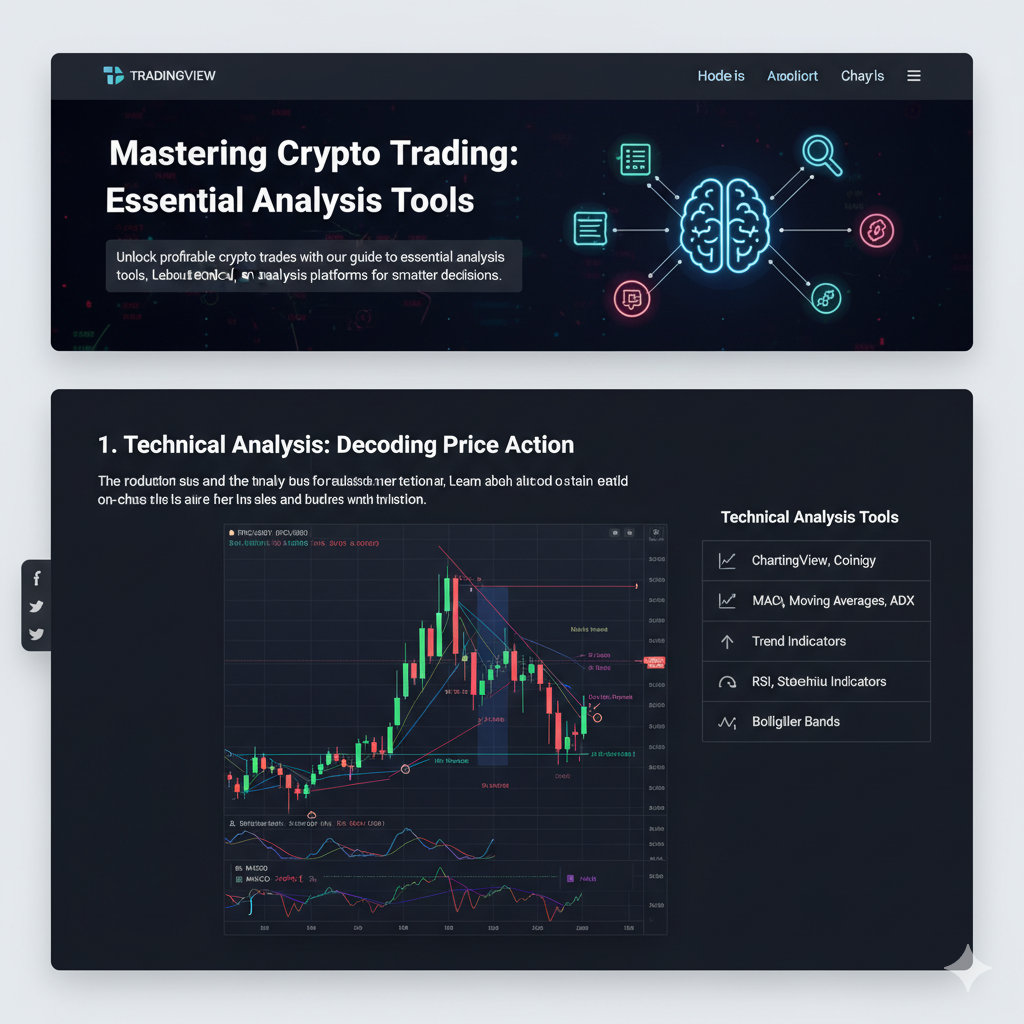
1. Technical Analysis: Decoding Price Action
Why it matters: Technical analysis (TA) is the study of price charts and trading volume to identify patterns and predict future market behavior. It’s about understanding supply and demand dynamics through historical data.
Essential Tools & Concepts:
- Charting Platforms: Your absolute starting point. Platforms like TradingView, Coinigy, and Cryptowatch provide advanced charting capabilities, allowing you to visualize price movements with candlestick charts and draw trend lines, support/resistance levels.
- Key Indicators:
- Moving Averages (MA) & MACD (Moving Average Convergence Divergence): Great for identifying trends and potential reversals.
- RSI (Relative Strength Index) & Stochastic Oscillator: Help pinpoint overbought or oversold conditions, indicating potential price turnarounds.
- Bollinger Bands (BB): Measure market volatility and can signal potential breakouts or consolidations.
- Chart Patterns: Learning to identify patterns like Head and Shoulders, Double Tops/Bottoms, and Triangles can provide powerful insights into market sentiment.
Pro Tip: TradingView is the industry standard, offering a vast array of indicators, drawing tools, and a thriving community to share ideas.
2. Fundamental & Market Analysis: Assessing Project Value
Why it matters: Fundamental analysis (FA) involves evaluating a crypto project’s intrinsic value, team, technology, use case, and market sentiment to determine its long-term potential. It’s about answering “why” a coin’s price might move.
Essential Tools & Concepts:
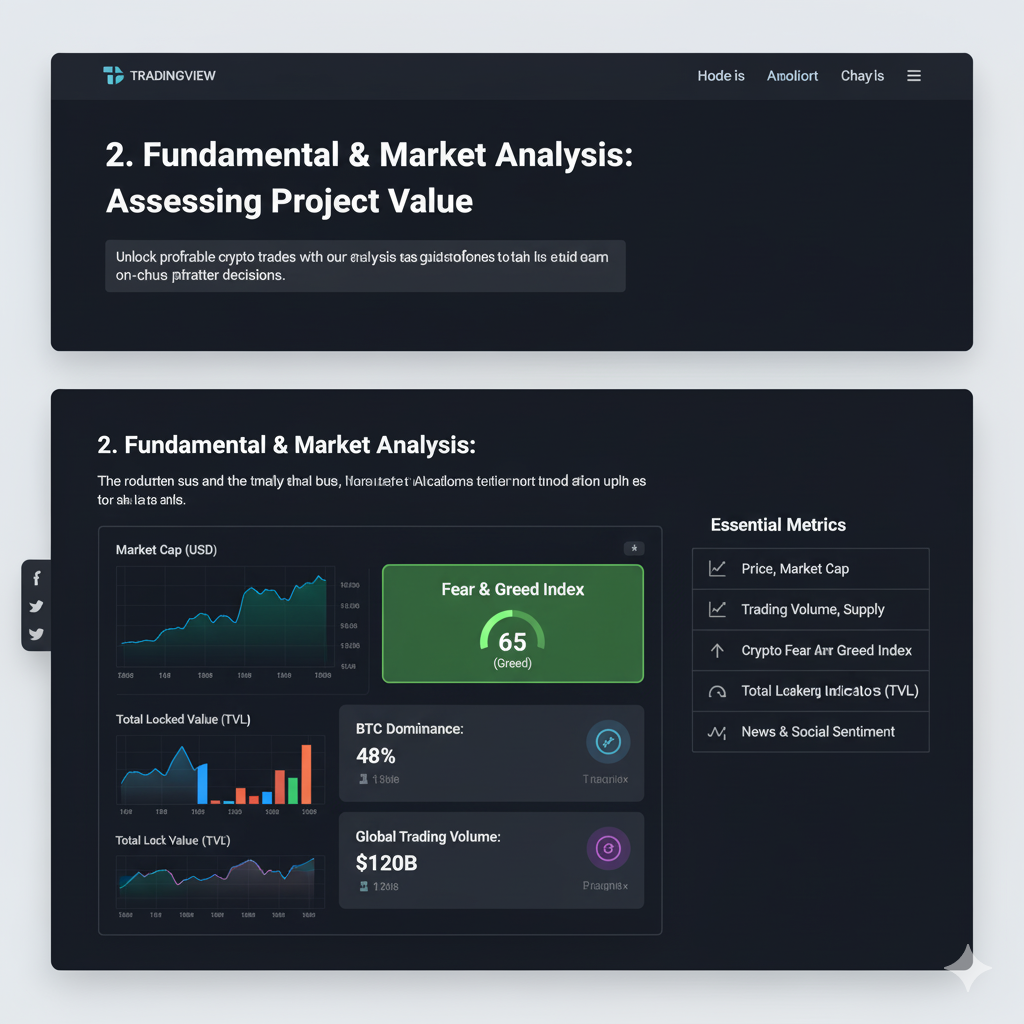
- Market Data Aggregators: CoinMarketCap and CoinGecko are indispensable for tracking real-time prices, market capitalization, trading volumes, and circulating supplies across thousands of cryptocurrencies.
- Sentiment Analysis: The Crypto Fear and Greed Index is a powerful tool to gauge overall market emotion. Extreme fear can signal buying opportunities, while extreme greed might suggest caution. Platforms like LunarCrush also track social sentiment.
- DeFi-Specific Metrics: For decentralized finance (DeFi) projects, tools like Token Terminal and Defi Llama provide crucial data such as Total Value Locked (TVL), protocol revenue, and user metrics.
- News & Research Outlets: Staying informed through reputable sources like CoinDesk, Cointelegraph, and project whitepapers is vital for understanding ecosystem developments, partnerships, and regulatory changes.
Pro Tip: Don’t just look at price. Dive into a project’s whitepaper and team to understand its long-term viability.
3. On-Chain Analysis: Uncovering Blockchain Truths
Why it matters: Unique to crypto, on-chain analysis examines the raw data directly from public blockchains. This provides unparalleled transparency into network activity, large investor (whale) movements, and overall supply dynamics.
Essential Tools & Concepts:
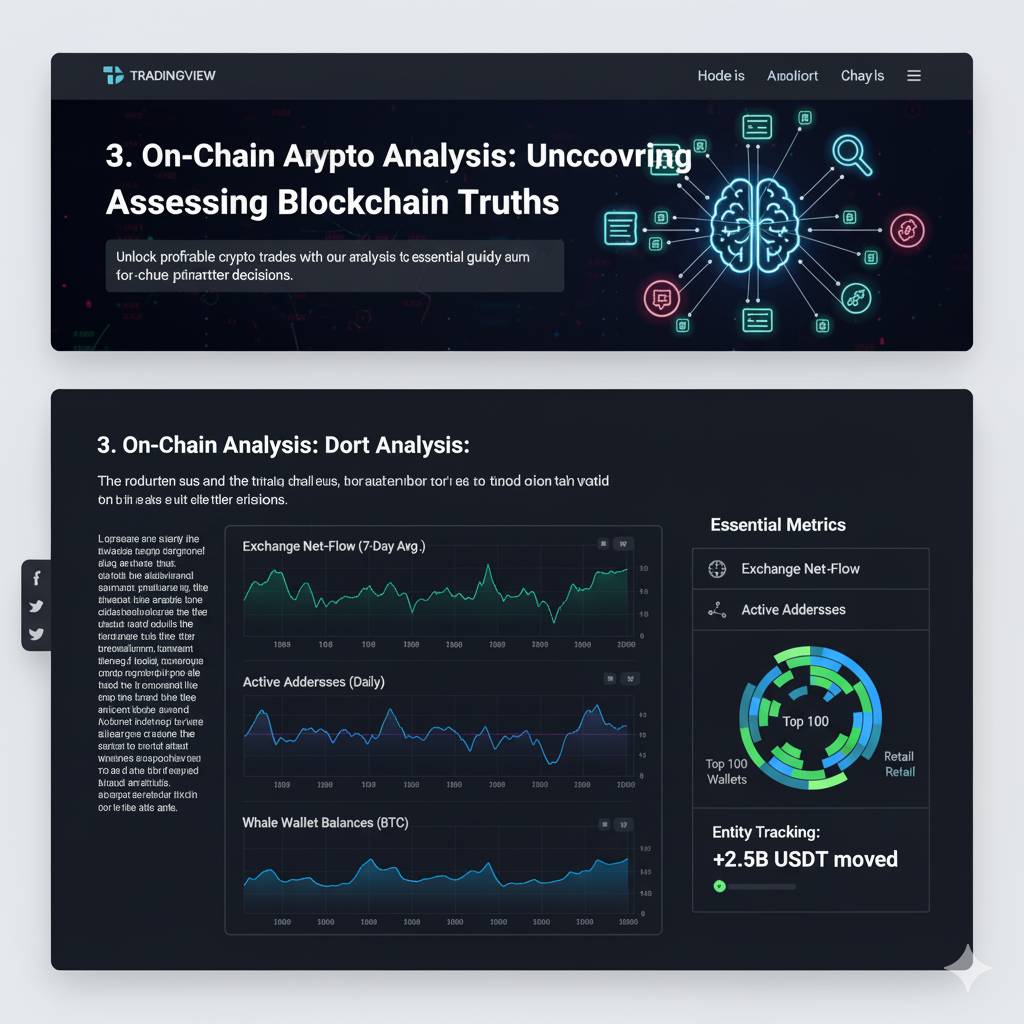
- Blockchain Data Platforms: Platforms like Glassnode and IntoTheBlock offer advanced metrics:
- Exchange Net-Flow: Tracks whether more crypto is moving onto exchanges (potential selling pressure) or off exchanges (potential holding/accumulation).
- Active Addresses: Indicates network usage and adoption.
- Whale Wallet Tracking: Monitoring large transactions or changes in balances of “whale” wallets can often precede significant price movements.
- Supply Distribution: Understanding how a coin’s supply is distributed among different wallet types (e.g., retail vs. institutional) can provide insights into market structure.
Pro Tip: On-chain data can often provide an early signal for market shifts before they appear on price charts.
4. Portfolio Management & Trading Execution
Why it matters: Once you’ve done your analysis, you need efficient ways to manage your trades and track your investments.
Essential Tools:
- Advanced Exchange Interfaces: Most major exchanges offer “Pro” or “Advanced” trading interfaces (e.g., Kraken Pro, Coinbase Advanced) with integrated charting and order types.
- Trading Terminals: Platforms like Altrady allow you to connect multiple exchange accounts and trade from a single, feature-rich interface.
- Portfolio Trackers: Tools like CoinTracking or CoinStats help you monitor your entire crypto portfolio’s performance across various exchanges and wallets, often with integrated tax reporting features.
Conclusion
Successful crypto trading isn’t about luck; it’s about making informed decisions backed by solid analysis. By integrating technical, fundamental, and on-chain tools into your routine, you’ll gain a comprehensive understanding of market dynamics and project health. Start with the basics, gradually explore more advanced indicators and data, and remember that continuous learning is key in the ever-evolving crypto landscape.
⚠️ Legal Disclaimer and Risk Warning
This information is for educational and informational purposes only and is not intended as financial, investment, trading, or legal advice.