Explore the past, present, and future of Terra’s tokens: USTC, LUNC, and the new LUNA 2.0. Understand their distinct paths, community efforts, and scalability challenges.
Terra’s Legacy: USTC, LUNC, & LUNA 2.0 Explained
The name “Terra” evokes a complex mix of innovation, ambition, and, for many, a painful lesson in the volatile world of cryptocurrency. What was once a top-tier ecosystem with a groundbreaking stablecoin collapsed dramatically in May 2022, leaving behind a fragmented community and multiple tokens.
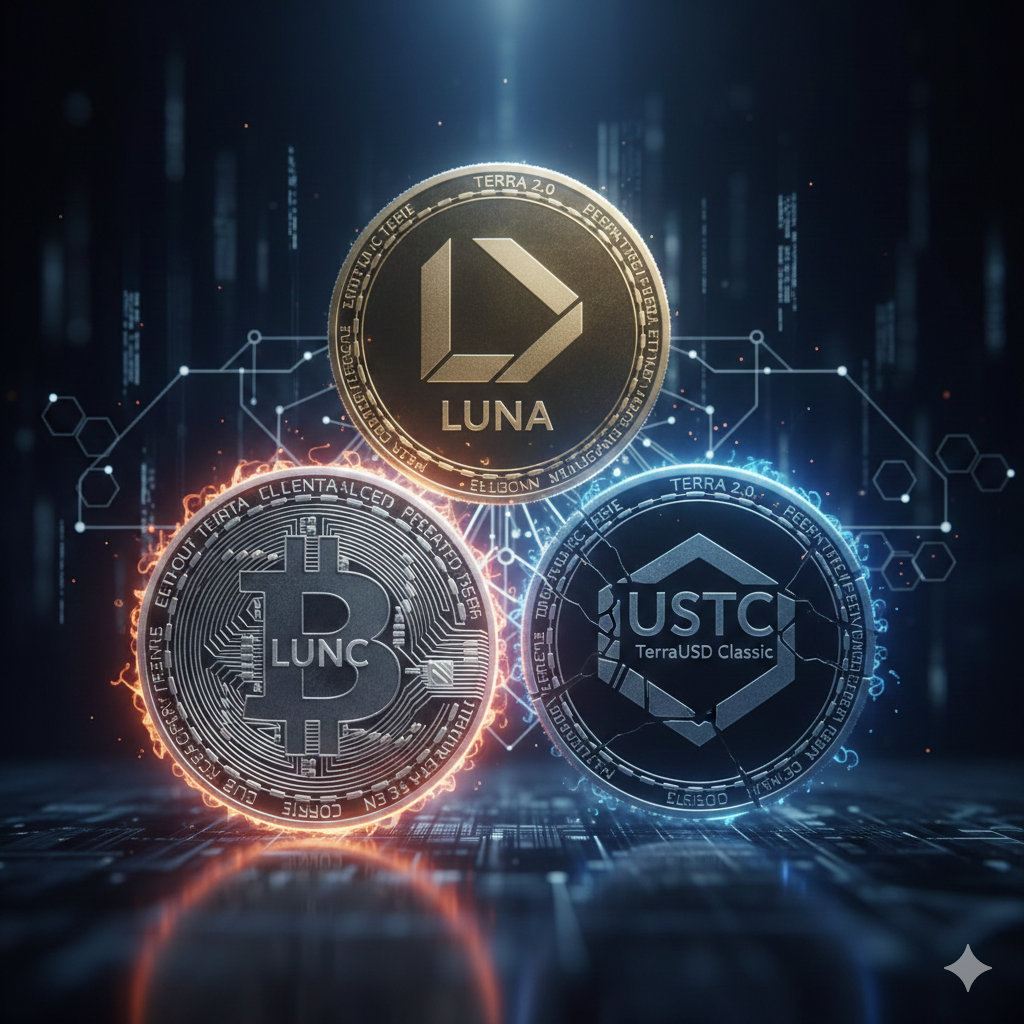
Today, the Terra landscape is defined by three distinct entities: Terra Classic USD (USTC), Terra Classic (LUNC), and the reborn Terra (LUNA 2.0). Let’s dive into each, their current status, and what the future might hold.
The Echoes of the Past: USTC and LUNC
Before the infamous de-peg, UST (now USTC) was an algorithmic stablecoin designed to maintain a $1 peg through a complex mint-and-burn mechanism with its sister token, LUNA (now LUNC). This innovative design was also its undoing. When market conditions led to UST losing its peg, the system spiraled, hyper-inflating LUNA’s supply and sending both tokens crashing by over 99.99%.
Terra Classic (LUNC) – The Community-Driven Revival
LUNC is the original, post-crash token of the Terra blockchain. It is now entirely community-driven, fueled by a passionate base attempting to “revive” it through:
- Token Burns: The community has implemented a transaction tax that burns a small percentage of LUNC with every on-chain interaction. Major exchanges like Binance have also contributed significantly to these burns, aiming to reduce the trillions of tokens in circulation.
- Restaking & Governance: Efforts are underway to re-enable staking, allowing holders to earn rewards and participate in crucial governance decisions that shape LUNC’s future.
- Infrastructure Revival: Developers are working to bring back utility to the chain, with ongoing efforts to upgrade the network and support dApps.
Terra Classic USD (USTC) – The De-pegged Stablecoin
USTC is the de-pegged algorithmic stablecoin from the original chain. While still trading, it has failed to regain its $1 peg. There are ongoing community discussions and proposals around potential re-pegging mechanisms or utility for USTC, but significant challenges remain.
The future of LUNC and USTC hinges entirely on the sustained efforts of its community, the effectiveness of its burn mechanisms, and its ability to attract new development and utility despite its tumultuous history.
The New Beginning: Terra (LUNA 2.0)
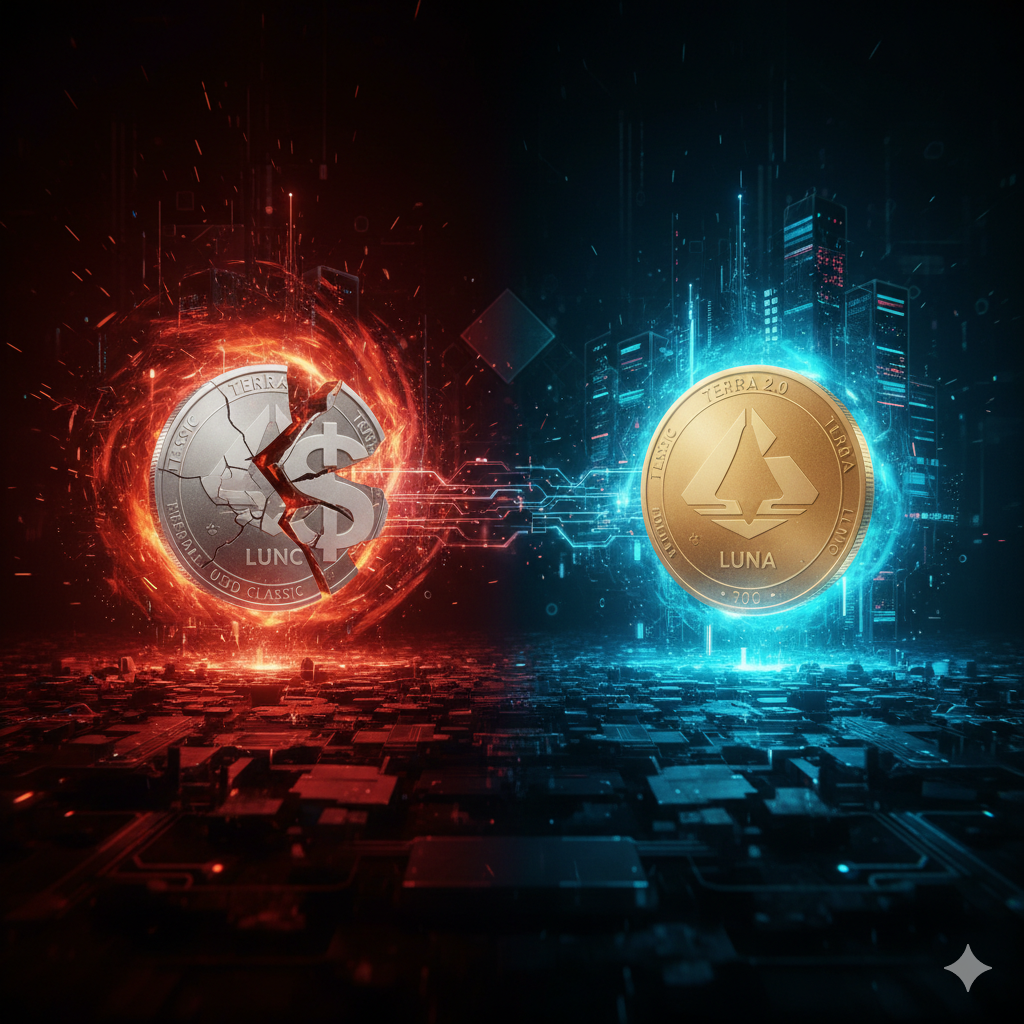
In the wake of the collapse, Terraform Labs and the community voted to launch a new blockchain, dubbed Terra (LUNA 2.0). This new chain was designed as a “phoenix from the ashes,” with a crucial difference: it does not feature an algorithmic stablecoin.
LUNA 2.0 tokens were airdropped to holders of the original LUNA (now LUNC) and USTC tokens based on pre and post-de-peg snapshots. The intention was to provide a clean slate for developers and users to build a new, more robust ecosystem.
Future of LUNA 2.0: Scalability and Community Trust
The journey for LUNA 2.0 has been challenging. While it offers a fresh start without the inherent risks of an algorithmic stablecoin, it faces an uphill battle in two critical areas:
- Rebuilding Trust: The collapse of the original Terra instilled deep skepticism across the crypto market. Attracting new users, developers, and investors requires significant, consistent effort to demonstrate reliability, transparency, and a commitment to long-term stability. The memory of the LUNA 1.0 crash casts a long shadow.
- Achieving Scalability and Adoption: LUNA 2.0 aims to be a vibrant Layer 1 blockchain, capable of hosting a wide array of decentralized applications. While built with modern blockchain architecture, it competes in a crowded market dominated by established players like Ethereum, Solana, and Avalanche. Its success will depend on:
- Developer Adoption: Can it attract talented developers to build innovative dApps and compelling use cases?
- Cross-Chain Interoperability: Its integration within the broader Cosmos/IBC ecosystem is a strong point, allowing for seamless communication with other chains.
- Transaction Speed & Cost: Maintaining competitive transaction speeds and low fees will be crucial for attracting users.
The future of LUNA 2.0 is uncertain but holds potential if it can differentiate itself, cultivate a new, loyal community, and, most importantly, restore the faith that was lost. It needs to prove that it can offer a truly scalable and secure environment that stands apart from its predecessor’s fate.
Conclusion
The Terra ecosystem’s saga is a compelling case study in the rapid evolution and inherent risks of decentralized finance. While USTC and LUNC represent a community-led attempt to salvage a legacy, LUNA 2.0 is a bold reboot aiming to learn from past mistakes. All three tokens exist in a highly speculative environment, with their long-term viability depending on continued development, community engagement, and, crucially, the slow, arduous process of rebuilding trust in the volatile world of crypto.